I blanched at the length of the school’s “Required Items” list, but as I prepare to send my son off to boarding school for the summer I decided to turn this into a QUEST for American-made products!
Here are my favorite product discoveries so far:
US-made organic cotton towels by 1888 Mills in Griffin, GA: These soft and fluffy towels, white with subtle accent colors (I chose sesame), are dreamy and quite affordable. The 3-piece set, with bath towel, hand towel, and wash cloth, was just $14.88. The hard part for me was that they are only available from WalMart. (I know, I know! Egad.) 1888 Mills usually only sells in quantities to the hotel trade, and I was having a hard time finding a good source for their products. I guess this is an instance where I must give WalMart credit for making a wonderful American-made product available to the individual consumer. I did call 1888 Mills, and a kind gentleman indicated that there might be additional venues for their wonderful towels in the coming months. I will check back with the company and update my Bed & Bath listings when I learn more.
Cotton Sheets from Mayfield Manufacturing in Thomson, GA: This was another great find, since I needed several sets of twin sheets. I chose the 300 thread-count set, and the feel and quality is very nice. I did notice, however, that the seams are 7 stitches per inch, as opposed to the 8 stitches per inch I was accustomed to with the Martha Stewart sheets by Westpoint Stevens (the latter are now all imported). I am an EXTREMELY infrequent mender, so I pay attention to these things because items that go onto my mending pile almost never return. I also give high marks to the family-owned business in Michigan, US-Mattress.com, who carries the Mayfield sheets. Their customer service was very friendly, and shipping was quick.
Shower/pool shoes from Okabashi in Buford, GA: I had been looking for an excuse to try some Okabashi flip flops, and I was very impressed with their solid construction and extremely comfortable feel. These are not your dime-store flip flops, and they come with a 2-year guarantee! In addition to pairs for the kids, I finally got the brown and pink thongs I had been lusting after. I received free shipping, and our shoes came in just a few days. (My son slipped his on and said, “Wow, these are really comfortable!”)
Athletic Shorts by Sovereign Manufacturing in Allentown, PA: these are very high quality shorts made from a heavy, silky polyester fabric in lots of great colors. My son likes his shorts long, so I was able to order the Tall sizes from Big and Tall World.
Well, that’s the update from the shopping wars. I can’t vouch for his grades, but at least my son will be outfitted with nothing but the best!
Stephanie, Webmaster
StillMadeinUSA.com
Thursday, June 26, 2008


Saturday, May 03, 2008
Wind Energy (and Green Manufacturing Jobs) Made in USA
As concern grows over the economic impact of imported oil, and the environmental impact of burning fossil fuels in general, I thought it would be interesting to take a look at alternative energy sources that are “made in USA.” Today’s installment is about Wind Power.
The use of wind to do work is hardly new…think of sailing ships and wind mills. However, use of wind to generate electricity is just coming of age, with refined turbine technologies and advanced composite materials. To date, American consumers have had few opportunities to purchase wind-generated electricity. Although installed wind power rose 45% in 2007 over 2006, wind still accounts for just a few percent of total electricity generation in the U.S.
Even where the winds are “made in USA,” the turbines are mostly made in Denmark or other European countries. Driven by their commitments to reduce carbon dioxide emissions associated with fossil fuel burning, European countries have pushed ahead on development of wind and other alternative energy technologies.
The fun part of this story is that there are a few companies in the US that make small, residential-scale wind turbines that can be purchased and installed at reasonable prices.

Southwest Windpower (West Flagstaff, AZ): since 1987, this company has specialized in small wind-driven generators, including wind turbine assemblies suited for residential or farm use. The Skystream 3.7 is a 3-bladed turbine that comes complete with built-in alternator, inverter, and noise isolator. Optional remote monitoring system allows users to receive real-time data on power generation on a home computer. The Skystream is mounted on a pole or tower, purchased separately, and the company recommends that it be about 20 feet above surrounding objects (e.g., roofline or trees). The entire unit is designed to be maintenance-free for 20 years.
The Skystream is connected to the house, via a 220 volt line with a safety disconnect switch, to a dedicated breaker on the main electrical panel. When the wind is blowing, electric power is generated, and used by the home. (Excess power flows into the electric grid, and depending on the utility’s policies, may generate a credit.). The Southwest Windpower website includes helpful information about working with your local utility and zoning officials when installing the wind turbine. (The Skystream also can be used for homes that use battery backup, as a complement to solar panels or other off-grid technology.)
The turbine operates with wind speeds as low as 8 mph, and has a safety feature that shuts down the turbine at wind speeds of 56 mph. In order to generate electricity of appropriate frequency and voltage, the unit is designed to maintain 330 rpm blade revolution speed even at higher wind speeds. (That means that only a portion of wind energy can be captured at wind speeds greater than about 20 mph.)
I noticed that Southwest Windpower products are available at NorthernTool, as well as from regional distributors that can also help with installation.

To learn more about wind power, check out these links:
Stephanie, Webmaster
StillMadeinUSA.com
The use of wind to do work is hardly new…think of sailing ships and wind mills. However, use of wind to generate electricity is just coming of age, with refined turbine technologies and advanced composite materials. To date, American consumers have had few opportunities to purchase wind-generated electricity. Although installed wind power rose 45% in 2007 over 2006, wind still accounts for just a few percent of total electricity generation in the U.S.
Even where the winds are “made in USA,” the turbines are mostly made in Denmark or other European countries. Driven by their commitments to reduce carbon dioxide emissions associated with fossil fuel burning, European countries have pushed ahead on development of wind and other alternative energy technologies.
The fun part of this story is that there are a few companies in the US that make small, residential-scale wind turbines that can be purchased and installed at reasonable prices.
Southwest Windpower (West Flagstaff, AZ): since 1987, this company has specialized in small wind-driven generators, including wind turbine assemblies suited for residential or farm use. The Skystream 3.7 is a 3-bladed turbine that comes complete with built-in alternator, inverter, and noise isolator. Optional remote monitoring system allows users to receive real-time data on power generation on a home computer. The Skystream is mounted on a pole or tower, purchased separately, and the company recommends that it be about 20 feet above surrounding objects (e.g., roofline or trees). The entire unit is designed to be maintenance-free for 20 years.
The Skystream is connected to the house, via a 220 volt line with a safety disconnect switch, to a dedicated breaker on the main electrical panel. When the wind is blowing, electric power is generated, and used by the home. (Excess power flows into the electric grid, and depending on the utility’s policies, may generate a credit.). The Southwest Windpower website includes helpful information about working with your local utility and zoning officials when installing the wind turbine. (The Skystream also can be used for homes that use battery backup, as a complement to solar panels or other off-grid technology.)
The turbine operates with wind speeds as low as 8 mph, and has a safety feature that shuts down the turbine at wind speeds of 56 mph. In order to generate electricity of appropriate frequency and voltage, the unit is designed to maintain 330 rpm blade revolution speed even at higher wind speeds. (That means that only a portion of wind energy can be captured at wind speeds greater than about 20 mph.)
I noticed that Southwest Windpower products are available at NorthernTool, as well as from regional distributors that can also help with installation.
To learn more about wind power, check out these links:
Bergey WindPower Co. (Norman, OK) also manufactures small wind turbines for home or farm applications
Green Pricing Programs, where utilities allow consumers to pay a premium (in cents per kWh) for electricity from renewables
American Wind Energy Association gathers data on growth of wind power capacity in the U.s.
Energy Information Agency provides data on renewables as a percentage of overall electricity generation in the U.S.
The Danish Wind Industry Association runs a very nice, informative website on wind power
Stephanie, Webmaster
StillMadeinUSA.com
Saturday, April 26, 2008
Fenton Art Glass Back From the Brink
There was wailing among glass collectors when Fenton Art Glass announced last fall that it would soon be forced to close because of economic hard times. Far from the glory days of West Virginia glassmaking, there are now only a handful of companies keeping the tradition alive. As the word spread, apparently many fans of Fenton glass began placing orders, so much so that the company reconsidered its options and has managed to stay open for business after all.
There is a “good news, bad news” aspect to the story, however. According to an April 7 article in the Charleston Daily Mail, the company will make some changes in how it does business, including development of a new division (Fenton International) that will sell glass products made in China. Still, the West Virginia factory will continue to turn out beautiful art glass, hopefully for many years to come. It will be up to consumers to determine whether this story is one of a fabled company surviving by importing product, or surviving because of a loyal customer base that appreciates the beauty of Fenton art glass.
Although I always associated Fenton with those candy dishes that grandmothers have on their coffee tables, in fact the company has a rather astonishing range of designs and glass styles. Enjoy the renewed option to own something beautiful, made in West Virginia.
Stephanie, Webmaster
StillMadeinUSA.com
There is a “good news, bad news” aspect to the story, however. According to an April 7 article in the Charleston Daily Mail, the company will make some changes in how it does business, including development of a new division (Fenton International) that will sell glass products made in China. Still, the West Virginia factory will continue to turn out beautiful art glass, hopefully for many years to come. It will be up to consumers to determine whether this story is one of a fabled company surviving by importing product, or surviving because of a loyal customer base that appreciates the beauty of Fenton art glass.
Although I always associated Fenton with those candy dishes that grandmothers have on their coffee tables, in fact the company has a rather astonishing range of designs and glass styles. Enjoy the renewed option to own something beautiful, made in West Virginia.
Stephanie, Webmaster
StillMadeinUSA.com
 |  |  |
 |  |  |
 |  |  |
Sunday, April 13, 2008
"Buy American" Feels Good, Looks Good
My sister commented that the new “Why Care” page of my website was just bad news, followed by more bad news! It made me sit back and think. I’ve always wanted StillMadeinUSA.com to be a nonpartisan, positive, upbeat place to buy American-made products. My site is not about “naming names” and chastising companies that outsource, much as I might be tempted. (That’s why I usually apply the rule, “if you have nothing nice to say, say nothing.”)
I think the “buy American” sites that focus on doing battle, doing without, or doing it to other countries (!) are tapping into our self-doubts rather than our self-confidence.
Buy American is more than tee shirts and jeans, and grim-faced guys in union halls! It is a joyous endeavor that celebrates American creativity, quality and style. The layoffs and plant closures are real, and not just a statistical oddity, but we will solve nothing by giving in to despair.
We still make some great products, so let’s get our chin off our chest, unwring our hands, and go shopping. (On the Internet, of course!).
Here are a few of my recent favorites.
Stephanie (aka, Pollyanna), Webmaster
StillMadeinUSA.com
I think the “buy American” sites that focus on doing battle, doing without, or doing it to other countries (!) are tapping into our self-doubts rather than our self-confidence.
Buy American is more than tee shirts and jeans, and grim-faced guys in union halls! It is a joyous endeavor that celebrates American creativity, quality and style. The layoffs and plant closures are real, and not just a statistical oddity, but we will solve nothing by giving in to despair.
We still make some great products, so let’s get our chin off our chest, unwring our hands, and go shopping. (On the Internet, of course!).
Here are a few of my recent favorites.
Stephanie (aka, Pollyanna), Webmaster
StillMadeinUSA.com
Cape Cod Weathervane  | Thorndike Mills
|
WroughtIronHaven
| Yvonne Totes  |
Collars and More  | Melia Luxury Pet  |
 | |
Hoy Saltwater Sandals | Little Colorado
|
 |
|
Hartstone Pottery | Lodge Cast Iron Cookware  |


Friday, April 11, 2008
Kid-Friendly Sheets Made in USA
Today’s topic is bedsheets. I know, I know…”Boring!” you say. But wait, there’s more. You also get…
As a parent I have observed the following: soccer-kicking, Halo-playing, skateboard-riding, Harry Potter-reading teens and tweens don’t have TIME to make their beds! Or so they say. (In fact, some days they seem hardly to have time to go to school. Hmm.)
Last night I was “googling” for American-made sheets (scarce as hen’s teeth) and I came across a company that makes sheets for RVs, campers, bunk beds and other special situations. Humboldt Specialty, in Omaha, NE has come up with a great kid-friendly feature. Their sheet sets have the top sheet attached to the bottom sheet at the foot. They discuss the benefits of this for making beds in tight corners and keeping the sheets on the bed where they belong. I immediately saw the application to kids who can’t/won’t make their beds.
Most mornings when I go to wake the kids, their top sheet is wadded in a ball at the base of the bed or totally off and on the floor. When they “make” their beds, they just pull the quilt over the sheets, wads and all. No “hospital corners” in our house! For all of us who are getting our kids ready to go off to boarding school or college in the fall, the Humboldt sheets seem like a godsend.
I am ordering some to try out. Give it a look and let me know what you think!
Stephanie, Webmaster
StillMadeinUSA.com
As a parent I have observed the following: soccer-kicking, Halo-playing, skateboard-riding, Harry Potter-reading teens and tweens don’t have TIME to make their beds! Or so they say. (In fact, some days they seem hardly to have time to go to school. Hmm.)
Last night I was “googling” for American-made sheets (scarce as hen’s teeth) and I came across a company that makes sheets for RVs, campers, bunk beds and other special situations. Humboldt Specialty, in Omaha, NE has come up with a great kid-friendly feature. Their sheet sets have the top sheet attached to the bottom sheet at the foot. They discuss the benefits of this for making beds in tight corners and keeping the sheets on the bed where they belong. I immediately saw the application to kids who can’t/won’t make their beds.
Most mornings when I go to wake the kids, their top sheet is wadded in a ball at the base of the bed or totally off and on the floor. When they “make” their beds, they just pull the quilt over the sheets, wads and all. No “hospital corners” in our house! For all of us who are getting our kids ready to go off to boarding school or college in the fall, the Humboldt sheets seem like a godsend.
I am ordering some to try out. Give it a look and let me know what you think!
Stephanie, Webmaster
StillMadeinUSA.com
Friday, January 04, 2008
Another All-American Store
Happy New Year to all!
The holiday shopping season was fast and furious, especially for American-made toys. Perhaps there was a silver lining to the lead paint toy recalls?! Before I close the book on 2007, I want to thank the many thousands of shoppers who visited StillMadeinUSA.com and especially those of you who wrote with suggestions, criticisms, or other feedback. Because of your emails, the site grew by several hundred listings just in the last few months! Every time I “discover” a great product or company, I remember why I spend so much time on this project.
Resolutions for 2008
Okay, we all have to do this. It serves a purpose if it helps us focus on things we want to accomplish or improve in the coming year.
1) Get in shape. For me, this doesn’t mean eating only grapefruit or joining a gym (not that there’s anything wrong with that!), but I resolve to move around more and eat less.
2) Live within my means. When times were tight, I borrowed from my family but now I have paid everyone back.
3) Stay in touch with friends and family. There is no excuse for being too busy to write or call or visit occasionally!
4) Overhaul my website. This is long overdue, and the site is not as useful to visitors as it could be.
5) Finish up my schoolwork. It’s just possible that I am wearing out my welcome at George Mason!
All-American Store
Perhaps in partial fulfillment of Resolution 4 (?!), I have posted a “beta-version” of an All-American Store, courtesy of Amazon.com. I often receive email from shoppers who wish for a store that sold only American-made products. There are a few virtual stores that try to fill this niche, but they tend to have limited selection and look similar to each other because they are relying on drop shipping from the same handful of suppliers. One attraction of the Amazon Store is that it allows me to hand-pick products to feature, there is no inventory, and no customer service or shipping hassles. The downside, however, is that there is also no profit! (Alright, I’m exaggerating. They pay a 4 percent commission on sales.)
So check out the latest entrant to the All-American Store genre, and tell me what you think. I will add products over time, focusing on those companies whose products are not readily available from other retailers.
Stephanie, Webmaster
StillMadeinUSA.com
The holiday shopping season was fast and furious, especially for American-made toys. Perhaps there was a silver lining to the lead paint toy recalls?! Before I close the book on 2007, I want to thank the many thousands of shoppers who visited StillMadeinUSA.com and especially those of you who wrote with suggestions, criticisms, or other feedback. Because of your emails, the site grew by several hundred listings just in the last few months! Every time I “discover” a great product or company, I remember why I spend so much time on this project.
Resolutions for 2008
Okay, we all have to do this. It serves a purpose if it helps us focus on things we want to accomplish or improve in the coming year.
1) Get in shape. For me, this doesn’t mean eating only grapefruit or joining a gym (not that there’s anything wrong with that!), but I resolve to move around more and eat less.
2) Live within my means. When times were tight, I borrowed from my family but now I have paid everyone back.
3) Stay in touch with friends and family. There is no excuse for being too busy to write or call or visit occasionally!
4) Overhaul my website. This is long overdue, and the site is not as useful to visitors as it could be.
5) Finish up my schoolwork. It’s just possible that I am wearing out my welcome at George Mason!
All-American Store
Perhaps in partial fulfillment of Resolution 4 (?!), I have posted a “beta-version” of an All-American Store, courtesy of Amazon.com. I often receive email from shoppers who wish for a store that sold only American-made products. There are a few virtual stores that try to fill this niche, but they tend to have limited selection and look similar to each other because they are relying on drop shipping from the same handful of suppliers. One attraction of the Amazon Store is that it allows me to hand-pick products to feature, there is no inventory, and no customer service or shipping hassles. The downside, however, is that there is also no profit! (Alright, I’m exaggerating. They pay a 4 percent commission on sales.)
So check out the latest entrant to the All-American Store genre, and tell me what you think. I will add products over time, focusing on those companies whose products are not readily available from other retailers.
Stephanie, Webmaster
StillMadeinUSA.com
Thursday, November 22, 2007
Autumn Leaves, Pumpkin Pie, and … Shopping
Today is one of those clear, sunny, fresh autumn days that I love so much. The sunlight falling on the trees makes them glow-- red-orange maples, burgundy redbuds, and yellow poplars. My garden looks in disarray after a busy summer, with the rose bush climbing over the fence into the neighbor’s yard, the mums falling all over themselves in a profusion of blooms, and the unwatched grasses that snuck back in to form a green carpet under all.
Today is Thanksgiving Day, and despite a hectic summer and fall, I have a lot to be thankful for. We survived a move to a smaller home, my youngest son has settled into life in a new school, our house has finally sold after months on the market. We are all healthy and our bills are paid.
It has been a busy autumn at StillMadeinUSA.com as well! Newspaper stories, including a story in the New York Times, and a guest spot on NPR’s On Point helped spread the word about StillMadeinUSA.com to new audiences. The number of visitors to the site continues to grow, and I have received hundreds of suggestions for companies or products to check out and list.
The recent toy recalls have been an alarming wake-up call for many parents, and shoppers searching for “toys made in USA” have been burning up my bandwidth! I hope the interest in American-made toys will spill over into other product categories and that shoppers will rediscover the many wonderful things that are still made in USA.
As in past years, I have posted a Virtual Holiday Catalog to get you started, but please don’t shop today! I hate the idea the Thanksgiving is just “the start of the holiday shopping season.” Enjoy the day for itself, take a deep breath, eat some turkey and stuffing, and share a glass of wine with family and friends, save room for the pumpkin pie. Be thankful for what you have, and think of a small thing that you can do to make someone else’s life happier.
Stephanie, Webmaster
StillMadeinUSA.com
Today is Thanksgiving Day, and despite a hectic summer and fall, I have a lot to be thankful for. We survived a move to a smaller home, my youngest son has settled into life in a new school, our house has finally sold after months on the market. We are all healthy and our bills are paid.
It has been a busy autumn at StillMadeinUSA.com as well! Newspaper stories, including a story in the New York Times, and a guest spot on NPR’s On Point helped spread the word about StillMadeinUSA.com to new audiences. The number of visitors to the site continues to grow, and I have received hundreds of suggestions for companies or products to check out and list.
The recent toy recalls have been an alarming wake-up call for many parents, and shoppers searching for “toys made in USA” have been burning up my bandwidth! I hope the interest in American-made toys will spill over into other product categories and that shoppers will rediscover the many wonderful things that are still made in USA.
As in past years, I have posted a Virtual Holiday Catalog to get you started, but please don’t shop today! I hate the idea the Thanksgiving is just “the start of the holiday shopping season.” Enjoy the day for itself, take a deep breath, eat some turkey and stuffing, and share a glass of wine with family and friends, save room for the pumpkin pie. Be thankful for what you have, and think of a small thing that you can do to make someone else’s life happier.
Stephanie, Webmaster
StillMadeinUSA.com
Sunday, September 23, 2007
Fisher & Paykel in the U.S.A.
At a time when many manufacturers are eyeing low-cost locales in Mexico or Asia, a New Zealand manufacturer of washers and dryers has set up shop in Ohio. Fisher & Paykel is a well-known brand in the Australian and New Zealand market, with a focus on energy and water efficient laundry appliances. The company produces direct-drive (no belt) and top-loading clothes washers, and dishwashers with pull-out drawers (the DishDrawer).
In 2005, F&P announced plans to move production of their SmartDrive washer line from Brisbane, Australia to Clyde, Ohio. The move was prompted by a desire to be close to North American markets so that freight costs are reduced and products can be delivered to customers more quickly. The new facility in Clyde, OH also makes sense because Clyde is home to a large division of Whirlpool and the two companies have had alliances in the past. F&P produces motors for Whirlpool and distributes Whirlpool products in New Zealand. In January 2007, F&P announced that its new AquaSmart clothes washer, which has energy and water saving features, will be assembled at the Clyde, OH facility.
When Fisher & Paykel was beginning its U.S. production, I was contacted by a representative of the company who was interested in official “Made in USA” labeling requirements so that the company could emphasize the fact that their products were being manufactured in the U.S. The move to the U.S. seems to be paying off; the company reports in their Annual Report for 2005-2006 that U.S. sales are now the largest source of revenue (38 percent of appliance sales), exceeding revenues from Australian or New Zealand.
If a company such as Fisher & Paykel recognizes the value of the American market, and feels that “Made in USA” is an important marketing theme, perhaps some of our own manufacturers will wake to the growing interest among U.S. shoppers to “buy American.”
Stephanie, Webmaster
StillMadeinUSA.com
In 2005, F&P announced plans to move production of their SmartDrive washer line from Brisbane, Australia to Clyde, Ohio. The move was prompted by a desire to be close to North American markets so that freight costs are reduced and products can be delivered to customers more quickly. The new facility in Clyde, OH also makes sense because Clyde is home to a large division of Whirlpool and the two companies have had alliances in the past. F&P produces motors for Whirlpool and distributes Whirlpool products in New Zealand. In January 2007, F&P announced that its new AquaSmart clothes washer, which has energy and water saving features, will be assembled at the Clyde, OH facility.
When Fisher & Paykel was beginning its U.S. production, I was contacted by a representative of the company who was interested in official “Made in USA” labeling requirements so that the company could emphasize the fact that their products were being manufactured in the U.S. The move to the U.S. seems to be paying off; the company reports in their Annual Report for 2005-2006 that U.S. sales are now the largest source of revenue (38 percent of appliance sales), exceeding revenues from Australian or New Zealand.
If a company such as Fisher & Paykel recognizes the value of the American market, and feels that “Made in USA” is an important marketing theme, perhaps some of our own manufacturers will wake to the growing interest among U.S. shoppers to “buy American.”
Stephanie, Webmaster
StillMadeinUSA.com
Monday, April 09, 2007
No More Camillus Knives
At the end of February 2007, Camillus Cutlery (Camillus, NY) closed its doors for the last time. The knife manufacturer, in business since 1876, was known for its pocket knives, but also made Boy Scout utility knives, Western knives, and military/tactical fighting knives. The company remained in its original location, on the banks of Nine Mile Creek, for all the years of its existence. Many of the workers at the facility were long-time employees, and some were third or fourth generation employees.
Although readers of the local paper in Camillus were aware of the company’s troubles, Internet surfers looking for the company’s website (www.camillusknives.com) are greeted only with the news that the site has been closed. The last listing of the site in the web archives is May 23, 2006, just days after the company’s workers walked out on strike to protest proposed drastic decreases in wages and health benefits. Camillus workers, members of the United Steelworkers, remained on strike from May through November 2006, before finally reaching agreement with the company on a new contract. Shortly thereafter, Camillus Cutlery announced sizeable layoffs, and within a few months the company had closed.
Is there a lesson in the closing of Camillus Cutlery, and if so, what is that lesson? Is it that American-made products cannot compete on price with products made elsewhere? Can financially troubled companies talk openly and honestly with workers about needed concessions? When unions are negotiating contracts with financially troubled companies, how can they support the company without sacrificing the quality of life of their members?
According to the USW website, there had not been a strike at the facility since 1952. I do not know whether the labor-management conflicts arose from approaches or decisions taken by the new management, or whether the economic realities facing the company made new salary and benefit conditions inevitable.
In any case, I am sad at the loss of a venerable old company that made quality products, sad that the sacrifice of the striking workers seemed only to hasten the demise of their employer. There must be a better way.
[For a while, at least, read more about the history of Camillus Cutlery]
Stephanie, Webmaster
StillMadeinUSA.com
Although readers of the local paper in Camillus were aware of the company’s troubles, Internet surfers looking for the company’s website (www.camillusknives.com) are greeted only with the news that the site has been closed. The last listing of the site in the web archives is May 23, 2006, just days after the company’s workers walked out on strike to protest proposed drastic decreases in wages and health benefits. Camillus workers, members of the United Steelworkers, remained on strike from May through November 2006, before finally reaching agreement with the company on a new contract. Shortly thereafter, Camillus Cutlery announced sizeable layoffs, and within a few months the company had closed.
Is there a lesson in the closing of Camillus Cutlery, and if so, what is that lesson? Is it that American-made products cannot compete on price with products made elsewhere? Can financially troubled companies talk openly and honestly with workers about needed concessions? When unions are negotiating contracts with financially troubled companies, how can they support the company without sacrificing the quality of life of their members?
According to the USW website, there had not been a strike at the facility since 1952. I do not know whether the labor-management conflicts arose from approaches or decisions taken by the new management, or whether the economic realities facing the company made new salary and benefit conditions inevitable.
In any case, I am sad at the loss of a venerable old company that made quality products, sad that the sacrifice of the striking workers seemed only to hasten the demise of their employer. There must be a better way.
[For a while, at least, read more about the history of Camillus Cutlery]
Stephanie, Webmaster
StillMadeinUSA.com
Monday, February 12, 2007
Still in Love (With my Pontiac G6!)
As Valentine’s Day approaches, I am happy to say I am in love. But let’s talk about cars!
After several months of driving my Pontiac G6, I thought I would post an update on her performance. She drives like a dream, and she talks to me too! She tells me when there may be ice outside, and when I need to go fill her gas tank. This latter turned out to be quite handy since, for inscrutable reasons, GM decided that “needle to the right” means the tank is EMPTY-- the opposite of other cars I have driven. So, I kept glancing at the fuel gauge and seeing the needle over to the right and thinking I had a full tank! Wrong. (Speaking of gasoline, I am getting 21.5 mpg for town driving...better than many cars on the road, but I am SURE we can do better than that!)

Now that the winter cold has arrived, I must confess that the salesman was correct! I have learned to LOVE the automatic start feature, and not just for the head-turn factor. (The kids love being able to start the car as they walk up to it, and catch looks of surprise on passers-by.) On these cold mornings, I start her up from the warmth of the house and she is warmed and ready to go when we come running out, late to school as usual!
Another nice touch in the GM Customer Service arena: A few days after I purchased the car, I sent an email to UAW Local 5960 thanking them for making a beautiful car for me. Although I did not receive a response to my email, a few weeks after my purchase I received a phone call from a woman at the Orion Assembly Plant in
Stephanie, Webmaster
StillMadeinUSA.com
src="http://pagead2.googlesyndication.com/pagead/show_ads.js">
Sunday, February 11, 2007
Stephanie goes Wireless!
One symptom of advancing age is declining ability to adopt new technologies. Egad! So, here I was, seemingly the last person on the planet (except my mom) without a cell phone. I always said I was happy to be unreachable at times. However, teenage children, who seem always to have JUST missed the bus and need a ride (!), have finally pushed me into the wireless age.
I “googled” to find some information on various family plans and wireless providers, and ended up using LetsTalk.com to do some research. I liked the site because it gives a comprehensive look at the service plans from more than a dozen carriers (including T-Mobile, Verizon, Cingular, and Sprint), and offers a great selection of phones available from each. LetsTalk also had better rebate offers than my local wireless stores, so I ended up getting my phones for free.
As a novice to the wireless world, I was surprised to learn that the service providers work with cell phone manufacturers to offer custom phones that only work with their service. Why am I tempted to use the phrase “in cahoots”??
After comparing coverage areas, plan features, and prices, I checked with Communication Workers of America to see if they had a recommendation for a “worker friendly” service provider, and decided to go with Cingular. I liked the Cingular Family Plans , but the other thing I loved was the Fire Red RAZR phone!!! How shallow, I know, but it a truly beautiful little phone...slender, elegant, understated...not a brassy, bright red like some OTHER phones! (I must have a special affinity for this soft metallic red color, because it is one of the reasons I have the “hots” for my Mag-Lite flashlight...)
I am still learning the features of my RAZR phone, but I have sent my first text message, entered some numbers in my address book, and this morning I used the alarm clock feature to wake up. I think there will be no going back! Technology is so cool.
Stephanie, Webmaster
StillMadeinUSA.com
I “googled” to find some information on various family plans and wireless providers, and ended up using LetsTalk.com
As a novice to the wireless world, I was surprised to learn that the service providers work with cell phone manufacturers to offer custom phones that only work with their service. Why am I tempted to use the phrase “in cahoots”??
After comparing coverage areas, plan features, and prices, I checked with Communication Workers of America to see if they had a recommendation for a “worker friendly” service provider, and decided to go with Cingular. I liked the Cingular Family Plans
I am still learning the features of my RAZR phone, but I have sent my first text message, entered some numbers in my address book, and this morning I used the alarm clock feature to wake up. I think there will be no going back! Technology is so cool.
Stephanie, Webmaster
StillMadeinUSA.com
Sunday, November 26, 2006
Start an American-Made Christmas Tradition
I like to enjoy each holiday as it comes along, including Thanksgiving. It’s the last bit of sanity before the winter holidays. I made my pumpkin pies, stuffed my turkey, drank wine with my friends and family. Now I take a deep breath, and turn my thoughts to snowflakes, candy canes, and stockings hung by the fireplace. (Note to elves: dust the mantel!!!)
Yesterday I finished my virtual catalog of gift ideas for the Winter Holidays...Winter Solstice, Chanukah, Christmas, Kwanza, New Year...I celebrate as many of them as I can! Not to say that we should all bow down to the Gods of Consumerism, but the reality is that many of us do a lot of shopping in the month of December.
Once again, I will try to put my consumer dollars to work supporting businesses that employ American workers. Last year I managed to find American-made products for almost everyone on my list. It’s not always easy, but I enjoy a challenge. So go forth to the malls and shops and read labels. If you cannot find what you want locally, check out my Holiday Gift Catalog for ideas.
Good luck with the quest, and don’t forget to send me suggestions or tips on companies or products you find! Always remember the reason for the gift...to show your friends and family that you love them.
Stephanie, Webmaster
StillMadeinUSA.com
Yesterday I finished my virtual catalog of gift ideas for the Winter Holidays...Winter Solstice, Chanukah, Christmas, Kwanza, New Year...I celebrate as many of them as I can! Not to say that we should all bow down to the Gods of Consumerism, but the reality is that many of us do a lot of shopping in the month of December.
Once again, I will try to put my consumer dollars to work supporting businesses that employ American workers. Last year I managed to find American-made products for almost everyone on my list. It’s not always easy, but I enjoy a challenge. So go forth to the malls and shops and read labels. If you cannot find what you want locally, check out my Holiday Gift Catalog for ideas.
Good luck with the quest, and don’t forget to send me suggestions or tips on companies or products you find! Always remember the reason for the gift...to show your friends and family that you love them.
Stephanie, Webmaster
StillMadeinUSA.com
Saturday, November 11, 2006
2007 Pontiac G6: SWEET!
How does a “Buy American” goddess go about buying a new car? Particularly a goddess that likes hybrids and high gas mileage and worries about carbon dioxide emissions?
As a loyal Ford Taurus owner, I was mourning the recent closing of Ford’s Atlanta assembly plant where my Taurus was made and waiting patiently for the Ford Fusion Hybrid to hit the dealer lots. Then, last fall I attended the Washington, DC auto show and checked out the Fusion in person. I confess I was disappointed with the interior, and the car’s profile had a masculine feel. To top off my dismay, the Ford Fusion was assembled at the Hermosillo plant in Mexico and the hybrid powertrain also was going to be imported. I remember asking the Ford representative how my purchase of a Ford Fusion Hybrid would be helping the U.S. autoworker? His only response was that at least Ford was a U.S. company! After that, I figured I would just keep the ’91 Taurus healthy and await new developments.
Then, last week one of “Fairfax County’s Finest” moved up my timeline. I was very politely informed that my inspection sticker had expired FIVE MONTHS ago. Egad. Upon inspection, my friendly neighborhood garage suggested $900 in repairs. Needless to say, I was thrust into car search mode.
 Despite my best intentions, and many promises to StillMadeinUSA.com visitors, I had never put together my Buy American Auto page. Still, I had done some research and I decided to share my search criteria and data here. I wanted a 4-door sedan, UAW-made, good gas mileage and environmental rating, assembled in USA with maximum amount of USA parts.
I considered the following criteria and data sources:
StillMadeinUSA.com
As a loyal Ford Taurus owner, I was mourning the recent closing of Ford’s Atlanta assembly plant where my Taurus was made and waiting patiently for the Ford Fusion Hybrid to hit the dealer lots. Then, last fall I attended the Washington, DC auto show and checked out the Fusion in person. I confess I was disappointed with the interior, and the car’s profile had a masculine feel. To top off my dismay, the Ford Fusion was assembled at the Hermosillo plant in Mexico and the hybrid powertrain also was going to be imported. I remember asking the Ford representative how my purchase of a Ford Fusion Hybrid would be helping the U.S. autoworker? His only response was that at least Ford was a U.S. company! After that, I figured I would just keep the ’91 Taurus healthy and await new developments.
Then, last week one of “Fairfax County’s Finest” moved up my timeline. I was very politely informed that my inspection sticker had expired FIVE MONTHS ago. Egad. Upon inspection, my friendly neighborhood garage suggested $900 in repairs. Needless to say, I was thrust into car search mode.
I considered the following criteria and data sources:
- Percent domestic content (defined as U.S. and Canadian-made parts), on a sales-weighted basis by automaker/brand (Level Field Institute, a site funded by retirees of Ford, GM, Chrysler, and their parts suppliers, reminds consumers that American jobs associated with auto manufacturing go far beyond assembly, and the source of the parts that go into the vehicles is an important indicator of the ripple effect of auto manufacturing in the U.S. economy).
- Union-made: United Auto Workers (UAW) have long set the standard for wages and benefits for all automakers in the U.S., and I prefer to support companies that employ union labor (UAW Made Vehicles for 2007 )
- Environmental performance, including carbon dioxide emissions (an important contributor to global climate change) and air pollutant emissions (smog and ground-level ozone precursors) (EPA's Green Vehicle Guide)
- Price and car reviews (Edmunds.com
and my favorite car columnist, Warren Brown of the Washington Post)
Based on my criteria, I had selected 2 cars for test drive: the Toyota Corolla, if made in
I went to see the Pontiac G6, did a test drive, and fell in love! What a sweet car! I got a great price, including a $1000 “conquest rebate” for switching from Ford to GM. The car is roomy, sporty, and drives beautifully. The instrument panel and interior styling is excellent, and the driver-side seat has adjustable lumbar support and feels GREAT. It also has driver, passenger, and roof-mounted side impact air bags. All this for approximately $17,000.
I feel like I got a bargain, and I am proud to be driving a vehicle assembled at the Orion Assembly plant in Lake Orion, Michigan by UAW Local 5960, with U.S.-made engine and transmission.
Stephanie, WebmasterStillMadeinUSA.com
Saturday, September 23, 2006
The Henry Ford Museum
[Part 4 of my Manufacturing Travel Log (Previous installments are at Greenfield Village, Dearborn Assembly Plant and Ford Rouge Complex.)]
In addition to a nice collection of old cars, which I expected, The Henry Ford Museum in Dearborn, MI had an amazing collection of steam-powered and early electricity generating engines that FAR surpassed anything on exhibit at the Smithsonian Museum of American History. The museum even has part of the steam-powered electricity generation setup used to power the Rouge Factory in Ford’s day. This consisted of 2 of the 12 gas/steam powered pistons that turned huge wheels, maybe 15 feet high? The placard said that Ford brought the machinery to the site, then built the museum around it, which I believe because it was massive!
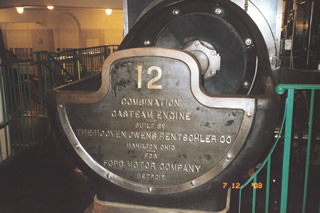
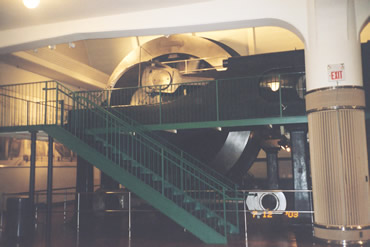
One disappointment I had with the curation for the steam and electricity displays was that the link was never made between the need to use steam power to turn a wheel, and the generation of electricity. (I saw the same gap in the explanations of Edison’s early electricity generating station in Greenfield Village.)
The Dymaxion House
Another display that was fun was the original aluminum-domed “house of the future”—called the Dymaxion House--designed by Buckminster Fuller in the 1920’s and offered as a solution to the post-WWI housing shortage. The house was proposed as a low-cost way to meet the housing needs of returning G.I.’s, and one that could be taken apart and moved to a new location as the occupants moved. Another marketing angle for the house was that it could be manufactured by aircraft manufacturers using aluminum skin technology developed for the war, and would provide continuing employment for workers at those factories.
Apparently only 2 prototypes were built, and despite having a number of orders, none were ever produced. The design seemed very ahead of its time, with rainwater recapture to a cistern for watering plants and gardens, overhead lighting with soft colors that could be altered to change the mood of the rooms, a passive ventilation system including a roof vent and outer wall panels that opened, and built-in closets and rotating shelves to save floor space and reduce clutter. The design incorporated the latest materials, including metal surfaces (with rounded corners for easy cleaning) and Naugahyde wall panels. The museum guide also pointed out that having 2 bathrooms was revolutionary in an era when nearly half of homes had no indoor “facilities” at all! (Side note: in checking the spelling of Naugahyde, I found the very cute website about the product and the history—-still made in USA!)
Stephanie, Webmaster
StillMadeinUSA.com
In addition to a nice collection of old cars, which I expected, The Henry Ford Museum in Dearborn, MI had an amazing collection of steam-powered and early electricity generating engines that FAR surpassed anything on exhibit at the Smithsonian Museum of American History. The museum even has part of the steam-powered electricity generation setup used to power the Rouge Factory in Ford’s day. This consisted of 2 of the 12 gas/steam powered pistons that turned huge wheels, maybe 15 feet high? The placard said that Ford brought the machinery to the site, then built the museum around it, which I believe because it was massive!
One disappointment I had with the curation for the steam and electricity displays was that the link was never made between the need to use steam power to turn a wheel, and the generation of electricity. (I saw the same gap in the explanations of Edison’s early electricity generating station in Greenfield Village.)
The Dymaxion House
Another display that was fun was the original aluminum-domed “house of the future”—called the Dymaxion House--designed by Buckminster Fuller in the 1920’s and offered as a solution to the post-WWI housing shortage. The house was proposed as a low-cost way to meet the housing needs of returning G.I.’s, and one that could be taken apart and moved to a new location as the occupants moved. Another marketing angle for the house was that it could be manufactured by aircraft manufacturers using aluminum skin technology developed for the war, and would provide continuing employment for workers at those factories.
Apparently only 2 prototypes were built, and despite having a number of orders, none were ever produced. The design seemed very ahead of its time, with rainwater recapture to a cistern for watering plants and gardens, overhead lighting with soft colors that could be altered to change the mood of the rooms, a passive ventilation system including a roof vent and outer wall panels that opened, and built-in closets and rotating shelves to save floor space and reduce clutter. The design incorporated the latest materials, including metal surfaces (with rounded corners for easy cleaning) and Naugahyde wall panels. The museum guide also pointed out that having 2 bathrooms was revolutionary in an era when nearly half of homes had no indoor “facilities” at all! (Side note: in checking the spelling of Naugahyde, I found the very cute website about the product and the history—-still made in USA!)
Stephanie, Webmaster
StillMadeinUSA.com
Friday, September 01, 2006
Greenfield Village: Henry Ford’s Celebration of Inventors and Machines
[Part 3 of my Manufacturing Travel Log (If you can't get enough, read Part 1 and Part 2. More to come!)]
Greenfield Village in Dearborn, MI was extremely interesting, both for what was there and for what it said about Henry Ford’s interests. Ford relocated buildings that represented important innovations of his day. These included Thomas Edison’s home, workshop, and early electrification station.
In addition, there was an operating railroad roundhouse where steam locomotives were still being repaired and serviced. (The roundhouse had some amazing machining tools, very large and used to make and repair parts for the trains. I was dying to go down to the floor and take a look, but the guide said he could not let me for safety reasons.) There was also an interesting display to explain how the burning coal was used to create steam, which then moved the pistons, which turned the wheel. I had never noticed the box at the end of the piston, where the steam actually came in and forced the piston to move. I still did not understand this fully—it seemed that the steam would have to be pulsed into the box so that the piston could move back into position between each stroke?
A Machinist is Born
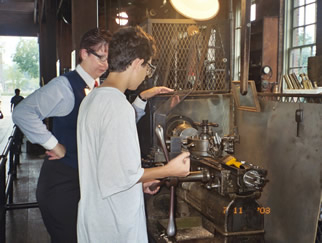 One of the highlights of Greenfield Village was the machine shop, where we had the chance to actually “cut metal” using a 1917 Brown and Sharpe turret lathe. Both my son and I took our turn to don safety glasses, and make a small brass candlestick. With apologies to “real” machinists, since I will not know the official terms for what we did, here is what I observed.
The mechanism was fascinating and so well thought out: the cutting tools were brought to the rotating brass rod by a mechanism that was hand-turned. We turned the handwheel counter-clockwise to move the bits to the left, and clockwise to pull back when the cut was complete. At the extreme of the turn, the piece holding the various bits (I think this was the “turret”?) would rotate and click into place so that the next bit was in position. I think there were 6 different cutting steps—two were used to drill out the center hole of the candleholder (for the candle), two removed excess metal from the outside of the piece to save wear on the carbide cutter that actually produced the curved shape of the candlestick. A final cut was a blade that cut the finished candlestick from the brass stock. These last 2 cuts were made by turning a separate handwheel that moved the rotating brass “south” to the carbide shaping blade, and “north” to the blade that cut the finished product from the brass bar.
 It was a little tricky to keep the progress of the cutting tool at an even speed, and not too fast. The turned piece gets quite hot from the friction, but there was no coolant involved. The docent said that occasionally someone breaks a bit or gets the lathe out of alignment and they have to stop and call their historical machinist. (Now that would be a fun job for someone!)
With one small project under my belt, I begin to see how people get hooked on cutting metal. Time to move the cars out of the garage, and start moving old metal in!
Stephanie, Webmaster
StillMadeinUSA.com
Greenfield Village in Dearborn, MI was extremely interesting, both for what was there and for what it said about Henry Ford’s interests. Ford relocated buildings that represented important innovations of his day. These included Thomas Edison’s home, workshop, and early electrification station.
In addition, there was an operating railroad roundhouse where steam locomotives were still being repaired and serviced. (The roundhouse had some amazing machining tools, very large and used to make and repair parts for the trains. I was dying to go down to the floor and take a look, but the guide said he could not let me for safety reasons.) There was also an interesting display to explain how the burning coal was used to create steam, which then moved the pistons, which turned the wheel. I had never noticed the box at the end of the piston, where the steam actually came in and forced the piston to move. I still did not understand this fully—it seemed that the steam would have to be pulsed into the box so that the piston could move back into position between each stroke?
A Machinist is Born
One of the highlights of Greenfield Village was the machine shop, where we had the chance to actually “cut metal” using a 1917 Brown and Sharpe turret lathe. Both my son and I took our turn to don safety glasses, and make a small brass candlestick. With apologies to “real” machinists, since I will not know the official terms for what we did, here is what I observed. The mechanism was fascinating and so well thought out: the cutting tools were brought to the rotating brass rod by a mechanism that was hand-turned. We turned the handwheel counter-clockwise to move the bits to the left, and clockwise to pull back when the cut was complete. At the extreme of the turn, the piece holding the various bits (I think this was the “turret”?) would rotate and click into place so that the next bit was in position. I think there were 6 different cutting steps—two were used to drill out the center hole of the candleholder (for the candle), two removed excess metal from the outside of the piece to save wear on the carbide cutter that actually produced the curved shape of the candlestick. A final cut was a blade that cut the finished candlestick from the brass stock. These last 2 cuts were made by turning a separate handwheel that moved the rotating brass “south” to the carbide shaping blade, and “north” to the blade that cut the finished product from the brass bar.
It was a little tricky to keep the progress of the cutting tool at an even speed, and not too fast. The turned piece gets quite hot from the friction, but there was no coolant involved. The docent said that occasionally someone breaks a bit or gets the lathe out of alignment and they have to stop and call their historical machinist. (Now that would be a fun job for someone!) With one small project under my belt, I begin to see how people get hooked on cutting metal. Time to move the cars out of the garage, and start moving old metal in!
Stephanie, Webmaster
StillMadeinUSA.com
Thursday, August 31, 2006
Green Design at the Ford Rouge Complex
Part 2 of my trip report on the Ford Rouge Complex in Dearborn, MI ... [Part 1 gives my reactions to the tour inside the Dearborn Assembly Plant]

Vertical Manufacturing—No More
Another aspect of the visit to the Rouge Complex is the understanding it gives of the complexity of the original enterprise. The short movie prepared by the tour company, which is not affiliated with Ford, emphasizes Henry Ford’s experiment in vertical manufacturing. The complex had its own steel mill, plate glass facility, and foundry, owned sources for the rubber that was used, and had its own deep-water port to bring in needed materials. However, the present day complex obtains its parts from many different suppliers, some of which are still brought in at the Rouge port. The steel mill still supplies steel for the stamping plant, but it is not owned by Ford. The tour guide told me that Ford would only buy steel from the on-site company as long as the price was competitive.
Green Building, Brown Product?
A major focus of the factory tour was the “green design” features that had been incorporated in the new assembly building. This included a green roof, featuring layers of material topped by a variety of sedum, designed to lower temperatures in the building and capture some of the rainwater that otherwise would run off. In addition, skylights on the roof were added to increase natural light in the building and lower lighting costs. Rainwater recapture systems, swales and ponds were used for on-site stormwater management (although the guide kept calling it a “storm management” system!).
Wildlife habitat was enhanced with natural plantings, and fruit trees (crabapples and one other that I can’t recall) were planted to provide food for wildlife. Ford even has a beekeeper who manages the bee hive within the planted area, placed to ensure pollination of the trees. Additional green features included the permeable pavement used for employee parking lots, which lessens rainwater runoff, and a system to recapture paint fumes (VOCs) as a source of hydrogen for a fuel cell to produce electricity for the painting facility.
The irony to me, of course, was that the company had built a green building within which it was assembling Ford 150 trucks, not exactly know for their environmentally friendly profile! The other sad part for me was that, despite the hopeful and forward-looking taped message from Bill Ford, the news about tough times at Ford Motor Co. made me fear that all of this effort to be innovative and green would have been for naught.
Stephanie, Webmaster
StillMadeinUSA.com
Vertical Manufacturing—No More
Another aspect of the visit to the Rouge Complex is the understanding it gives of the complexity of the original enterprise. The short movie prepared by the tour company, which is not affiliated with Ford, emphasizes Henry Ford’s experiment in vertical manufacturing. The complex had its own steel mill, plate glass facility, and foundry, owned sources for the rubber that was used, and had its own deep-water port to bring in needed materials. However, the present day complex obtains its parts from many different suppliers, some of which are still brought in at the Rouge port. The steel mill still supplies steel for the stamping plant, but it is not owned by Ford. The tour guide told me that Ford would only buy steel from the on-site company as long as the price was competitive.
Green Building, Brown Product?
A major focus of the factory tour was the “green design” features that had been incorporated in the new assembly building. This included a green roof, featuring layers of material topped by a variety of sedum, designed to lower temperatures in the building and capture some of the rainwater that otherwise would run off. In addition, skylights on the roof were added to increase natural light in the building and lower lighting costs. Rainwater recapture systems, swales and ponds were used for on-site stormwater management (although the guide kept calling it a “storm management” system!).
Wildlife habitat was enhanced with natural plantings, and fruit trees (crabapples and one other that I can’t recall) were planted to provide food for wildlife. Ford even has a beekeeper who manages the bee hive within the planted area, placed to ensure pollination of the trees. Additional green features included the permeable pavement used for employee parking lots, which lessens rainwater runoff, and a system to recapture paint fumes (VOCs) as a source of hydrogen for a fuel cell to produce electricity for the painting facility.
The irony to me, of course, was that the company had built a green building within which it was assembling Ford 150 trucks, not exactly know for their environmentally friendly profile! The other sad part for me was that, despite the hopeful and forward-looking taped message from Bill Ford, the news about tough times at Ford Motor Co. made me fear that all of this effort to be innovative and green would have been for naught.
Stephanie, Webmaster
StillMadeinUSA.com
Wednesday, August 30, 2006
Ford Motor Co.’s Dearborn Assembly Plant
This summer, rather than head to the beach or something else predictable, our family took a “manufacturing” vacation! I figured I’d better get the kids to some facilities before American manufacturing goes the way of the pterodactyl. We hit several interesting spots, so I decided to write a few installments on “the blog” to share with everyone, and maybe make you want to go check out your local manufacturing facilities.
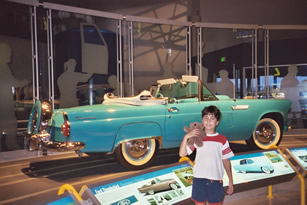
Dearborn Truck Assembly Plant (Part 1)
As a Ford Taurus owner, I wanted to make my pilgrimage to Dearborn, MI, world headquarters of Ford Motor Co. and site of the renovated Dearborn Assembly Plant (the Rouge Factory) and Henry Ford Museum and Greenfield Village. I was most excited about the opportunity to see inside the truck assembly plant.
I really enjoyed the Ford Rouge Factory Tour, although it wasn’t as complete as I had hoped. Apparently the tour was changed some years ago because of safety concerns, and it no longer covers the welding or painting parts of the work. So, all we were able to see was the final assembly of the F150 trucks. (Another disappointment was that I did not see the Diego Rivera murals—I had thought they were part of the tour, but apparently they are at the Detroit Institute of Arts.)
The new Dearborn Assembly Plant was impressive, with lots of space and natural light. The facility was very clean, and not as noisy as I had expected. The workers did not seem rushed as they did their work on the passing vehicles. In fact, they seemed almost leisurely as they stepped on and off the moving line. When I commented on that to one of the guides, he smiled and said “yes, but remember they only have 43 seconds [to work on each vehicle as it passes by].”
I was also surprised to see how much of the work was still done by hand, by humans. We did see robots positioning the front windshield onto the frames, and there was a noisy and impressive point where the truck cab and bed came together. But, in general, we saw the workers putting on interior components of doors, pressing on rubber seals, and wiring up lights.
When 11:30 a.m. came, the line stopped and workers began to leave their stations for lunch. I noticed that each finished up the vehicle he/she was working on, rather than bolting for the door. I also noticed that a few of the workers stayed at their stations, opening lunch bags they had brought from home. I wondered if this was a way of being frugal, and whether it would make me lonely not to sit down to lunch with my coworkers.
 The workers I watched were much more diverse than my stereotype of a UAW member; many were women, and many were minorities. Apparently the power tools, which were pulled down for use, were light enough that they were easily handled by the women. I also noticed that the workers were young, or at most middle-aged. I wondered it the age demographic was a result of the buy-outs and early retirement packages that Ford has been offering, or perhaps just a reality that work of this type (which requires one to stand, walk, and bend all day) takes its toll on a body after years.
Despite the good working environment, I thought I would be quickly bored by the repetitive nature of the job and the inability to “chat” with coworkers because of the noise.
Each worker or team had a work station with orderly stacked bins of parts needed for their part of the assembly. I read that these stations were supposed to have a 2-hour supply of parts. I assume this is part of the “Lean Manufacturing” ethic, but it seemed like it would have been more efficient to have a day’s worth. Watching the long assembly line, and the extremely large number of small parts involved, gave me new appreciation for the complexity of the relationship between assembly and parts suppliers. If any single part were to run out, the entire operation would have to shut down. Talk about pressure!
The end of the assembly process involved filling the vehicles with fluids, and testing them in various ways (e.g., on a dynamometer). What an interesting idea—that such a complicated piece of machinery could be put together by many hands, in many steps, and the final test that all worked is whether or not the truck starts and drives as intended!
Stephanie, Webmaster
StillMadeinUSA.com
Dearborn Truck Assembly Plant (Part 1)
As a Ford Taurus owner, I wanted to make my pilgrimage to Dearborn, MI, world headquarters of Ford Motor Co. and site of the renovated Dearborn Assembly Plant (the Rouge Factory) and Henry Ford Museum and Greenfield Village. I was most excited about the opportunity to see inside the truck assembly plant.
I really enjoyed the Ford Rouge Factory Tour, although it wasn’t as complete as I had hoped. Apparently the tour was changed some years ago because of safety concerns, and it no longer covers the welding or painting parts of the work. So, all we were able to see was the final assembly of the F150 trucks. (Another disappointment was that I did not see the Diego Rivera murals—I had thought they were part of the tour, but apparently they are at the Detroit Institute of Arts.)
The new Dearborn Assembly Plant was impressive, with lots of space and natural light. The facility was very clean, and not as noisy as I had expected. The workers did not seem rushed as they did their work on the passing vehicles. In fact, they seemed almost leisurely as they stepped on and off the moving line. When I commented on that to one of the guides, he smiled and said “yes, but remember they only have 43 seconds [to work on each vehicle as it passes by].”
I was also surprised to see how much of the work was still done by hand, by humans. We did see robots positioning the front windshield onto the frames, and there was a noisy and impressive point where the truck cab and bed came together. But, in general, we saw the workers putting on interior components of doors, pressing on rubber seals, and wiring up lights.
When 11:30 a.m. came, the line stopped and workers began to leave their stations for lunch. I noticed that each finished up the vehicle he/she was working on, rather than bolting for the door. I also noticed that a few of the workers stayed at their stations, opening lunch bags they had brought from home. I wondered if this was a way of being frugal, and whether it would make me lonely not to sit down to lunch with my coworkers.
Despite the good working environment, I thought I would be quickly bored by the repetitive nature of the job and the inability to “chat” with coworkers because of the noise.
Each worker or team had a work station with orderly stacked bins of parts needed for their part of the assembly. I read that these stations were supposed to have a 2-hour supply of parts. I assume this is part of the “Lean Manufacturing” ethic, but it seemed like it would have been more efficient to have a day’s worth. Watching the long assembly line, and the extremely large number of small parts involved, gave me new appreciation for the complexity of the relationship between assembly and parts suppliers. If any single part were to run out, the entire operation would have to shut down. Talk about pressure!
The end of the assembly process involved filling the vehicles with fluids, and testing them in various ways (e.g., on a dynamometer). What an interesting idea—that such a complicated piece of machinery could be put together by many hands, in many steps, and the final test that all worked is whether or not the truck starts and drives as intended!
Stephanie, Webmaster
StillMadeinUSA.com
Friday, June 30, 2006
American-Made Tools
Sorry to be such a girl, but my idea of tools is hammer, saw and screwdriver (and yes, I know about the slotted vs. Phillips head thing). Thanks again to Practical Machinist, I now know that there are machine tools, air tools, and tool companies that only sell from trucks (“mobile tool sellers” like Snap-On and Cornwell). Not to mention specialty tools (e.g., for manufacturing of autos and aircraft, for working on railroad equipment and tracks) that are mostly for industrial use (not that it stops the hard-core DIYers from wanting them in the home shop!).
 After doing a little research (i.e., Googling and pestering companies for information on place of manufacture), I am happy to announce my new Tools page. This is the first entirely new category I have added since launching StillMadeinUSA.com 2 years ago.
I always liked ChannelLocks when I was a kid, so I am happy to report they are still around, still made in USA, and now with a sporty blue rubber grip! (I noticed a trend toward more shock-absorbing handles on tools, which is a good thing.) I didn’t find American-made tool sets geared for us girls (smaller handles, maybe some pink?!), but I’m still looking.
So, look for American Made Tools when you shop, and stay tuned as I continue to add to the page. (Recommendations especially welcome on this one!)
Stephanie, Webmaster
StillMadeinUSA.com
After doing a little research (i.e., Googling and pestering companies for information on place of manufacture), I am happy to announce my new Tools page. This is the first entirely new category I have added since launching StillMadeinUSA.com 2 years ago. I always liked ChannelLocks when I was a kid, so I am happy to report they are still around, still made in USA, and now with a sporty blue rubber grip! (I noticed a trend toward more shock-absorbing handles on tools, which is a good thing.) I didn’t find American-made tool sets geared for us girls (smaller handles, maybe some pink?!), but I’m still looking.
So, look for American Made Tools when you shop, and stay tuned as I continue to add to the page. (Recommendations especially welcome on this one!)
Stephanie, Webmaster
StillMadeinUSA.com
Tuesday, June 27, 2006
Junk-Free Summer Birthday Parties
I thought I was so crafty when I decided to have all of my children in late summer. I wanted my maternity leave to be in the fall, and after the first child I was locked into the schedule by the seasonality of my maternity clothes. Rank amateur! Each time, the break from work was wonderful, with fresh autumn weather and the chance to stand at the bus stop when the older ones went off to school in September.
But somewhere in the calculation, I forgot that I also was committing to an annual marathon of summer birthday parties! When kids are toddlers, the parties are fun because they’re really parties for the parents and their friends. Then, the children get larger and rowdier, and harder to impress. The little invitees are jaded at the age of four by a procession of clowns, magic shows, moon bounces, piñatas, and exquisite ice cream cakes. We ran the gauntlet of Chuck-E-Cheeses, laser tag, bowling, Discovery Zone, until finally I couldn’t take it anymore.
Last summer I decided to have an old-fashioned party at HOME, with a homemade cake and snacks, and kids running through the sprinkler with water guns. It was really FUN! The way kid birthday parties are supposed to be! The truly amazing thing was that the backyard party WAS a novelty to the kids because almost no one (apparently) does it anymore.
The other victory for me was that I was able to avoid the obligatory goody bag filled with cheap imported junk toys. Instead I ordered Wiffle Ball and Bat sets (from The Connecticut Store) for each child as a party favor. We even played a little Wiffle Ball during the party.
Other great party favor ideas made in USA (and sugar-free!), sent in by Bob in Texas:
But somewhere in the calculation, I forgot that I also was committing to an annual marathon of summer birthday parties! When kids are toddlers, the parties are fun because they’re really parties for the parents and their friends. Then, the children get larger and rowdier, and harder to impress. The little invitees are jaded at the age of four by a procession of clowns, magic shows, moon bounces, piñatas, and exquisite ice cream cakes. We ran the gauntlet of Chuck-E-Cheeses, laser tag, bowling, Discovery Zone, until finally I couldn’t take it anymore.
Last summer I decided to have an old-fashioned party at HOME, with a homemade cake and snacks, and kids running through the sprinkler with water guns. It was really FUN! The way kid birthday parties are supposed to be! The truly amazing thing was that the backyard party WAS a novelty to the kids because almost no one (apparently) does it anymore.
The other victory for me was that I was able to avoid the obligatory goody bag filled with cheap imported junk toys. Instead I ordered Wiffle Ball and Bat sets (from The Connecticut Store) for each child as a party favor. We even played a little Wiffle Ball during the party.
Other great party favor ideas made in USA (and sugar-free!), sent in by Bob in Texas:
- Slinky (about $4)
- Stanzel Flying Models (about $6)
- Kazoobie plastic kazoos (less than $1, lots of colors, also available with lanyard)
- Poof foam balls
- Super bubbles
- Rose Art modeling dough
Monday, June 26, 2006
American-Made Solid Wood Furniture: Not Just an East-Coast Thing
Perhaps it is my East-coast bias, but I always associated furniture manufacturing with North Carolina/Southwestern Virginia/Pennsylvania, with a nod to New England for smaller scale production of pieces by cantankerous Yankee craftsmen! Some of the better known furniture makers have fallen on hard times in recent years, and as with other sorts of manufacturing, it is getting harder to find American-made solid wood furniture.
I was happy to discover, however, that there is a vibrant furniture-making tradition in the Pacific Northwest. While searching for American-made Windsor dining chairs, I came upon House2Home Furniture
 , an online store that carries solid wood furniture from a number of American manufacturers. The site features a number of Oregon-based furniture makers, including John Boos & Co. (makers of kitchen butcher block furniture), John Greenleaf (a wonderful brand of unfinished solid wood furniture), Pacific Woodcraft, and Westview Products.
House2Home Furniture
also carries my favorite lines of wooden children’s furniture: brightly painted Jellybeans, made in America’s Heartland, and Little Colorado (you guessed it—made in Colorado!).
Other American-made brands at House2Home Furniture
include Catskill Craftsman (kitchen furniture), Old Adirondack (natural cedar furniture from New York State), Richardson Bro.s (Sheboygan, WI), Maco Wood Products, Country Furniture Mfg (home office, hutch and buffet furniture), and Quality Craft (solid pine furniture made in California).
In addition to regional differences in furniture-making styles and techniques, biology plays a role. East-coast furniture usually features hardwoods such as maple, cherry, and oak, whereas West-coast furniture makers often use red alder, birch, and pine. For handcrafted Adirondack chairs, expect natural cedar. (A nice site to learn more about America’s native trees and the qualities of various hardwoods is the American Hardwood Information Center)
I can’t leave the topic of furniture without paying homage to the Windsor chair that started it all. The most beautiful example I found was the individually handcarved chairs of David Spero, on his site Vermont Windsor Chairs. I hope Santa is taking notes!
[Disclosure Note: I have joined the House2Home Affiliate program, so a small percent of purchases made from the links on my site will go to support StillMadeinUSA.com.]
Stephanie, Webmaster
StillMadeinUSA.com
I was happy to discover, however, that there is a vibrant furniture-making tradition in the Pacific Northwest. While searching for American-made Windsor dining chairs, I came upon House2Home Furniture
House2Home Furniture
Other American-made brands at House2Home Furniture
In addition to regional differences in furniture-making styles and techniques, biology plays a role. East-coast furniture usually features hardwoods such as maple, cherry, and oak, whereas West-coast furniture makers often use red alder, birch, and pine. For handcrafted Adirondack chairs, expect natural cedar. (A nice site to learn more about America’s native trees and the qualities of various hardwoods is the American Hardwood Information Center)
I can’t leave the topic of furniture without paying homage to the Windsor chair that started it all. The most beautiful example I found was the individually handcarved chairs of David Spero, on his site Vermont Windsor Chairs. I hope Santa is taking notes!
[Disclosure Note: I have joined the House2Home Affiliate program, so a small percent of purchases made from the links on my site will go to support StillMadeinUSA.com.]
Stephanie, Webmaster
StillMadeinUSA.com
Friday, May 05, 2006
King Louie Spared the Guillotine!
American-made polo shirts are scarce as hens’ teeth, but perhaps will be spared the fate of the Passenger Pigeon. Pine Island Sportswear, makers of polo shirts in lots of great colors, recently decided to take their polo shirt sewing off-shore. Then came the announcement by King Louie International that, after 72 years in business, they would cease all production by June. This was “fowl” news indeed! The King Louie brand of polos and other garments are union made in USA, and have been a favorite with “Buy American” shoppers.
Now for the good news! Michael Lerner, son of the founder of the company that became King Louie International, has reached an “agreement in principle” to buy the sewing plant in Baxter Springs, KS. The company will be renamed King Louie American, and will continue to produce the King Louie label using union labor in USA.

Although the company’s market focus has been the promotional products industry, King Louie products have been available to individual consumers thanks to sites like AllAmericanClothing.com and BuyGolfShirts.com. So celebrate the saving of a great label and 163 American jobs by ordering a King Louie polo shirt this weekend.
Sources: The Joplin Globe (Baxter Springs, KS) , King Louie Saved By Son of Co-Founder
Stephanie
StillMadeinUSA.com
Now for the good news! Michael Lerner, son of the founder of the company that became King Louie International, has reached an “agreement in principle” to buy the sewing plant in Baxter Springs, KS. The company will be renamed King Louie American, and will continue to produce the King Louie label using union labor in USA.
Although the company’s market focus has been the promotional products industry, King Louie products have been available to individual consumers thanks to sites like AllAmericanClothing.com and BuyGolfShirts.com. So celebrate the saving of a great label and 163 American jobs by ordering a King Louie polo shirt this weekend.
Sources: The Joplin Globe (Baxter Springs, KS) , King Louie Saved By Son of Co-Founder
Stephanie
StillMadeinUSA.com